
Economical Cable Design: Key Considerations for Long-Term Performance
An overview of sheath bonding techniques
ECONOMICAL CABLE DESIGN
Understanding Economical Cable Design
When embarking on an economical cable design, many assume that the primary focus lies solely in the sizing of the conductors. However, a comprehensive approach to cable design requires a deeper examination, especially regarding long-term sheath losses. These losses can significantly affect the performance and efficiency of cable systems over time, making them an essential consideration right from the design phase.
Importance of Specialized Bonding Methods
To ensure optimal performance and minimize losses, it is crucial to consider specialized bonding methods during the early stages of cable design. Bonding methods are not just an afterthought; they play a vital role in the performance longevity of the cable system. Typically, three bonding methods are predominantly explored: solid bonding, single point bonding, and cross bonding.
Evaluating Bonding Methods
Solid bonding involves connecting all metallic sheaths and armors of a cable to a common ground, ensuring minimal potential differences, and reducing sheath losses. This method is particularly advantageous in environments where consistent grounding is necessary.
Single point bonding limits the bonding connection to only one point along the cable path. This technique is beneficial in scenarios with minimal stray currents and can be useful in simplifying the bonding network, albeit it requires careful planning to avoid issues with potential gradients.
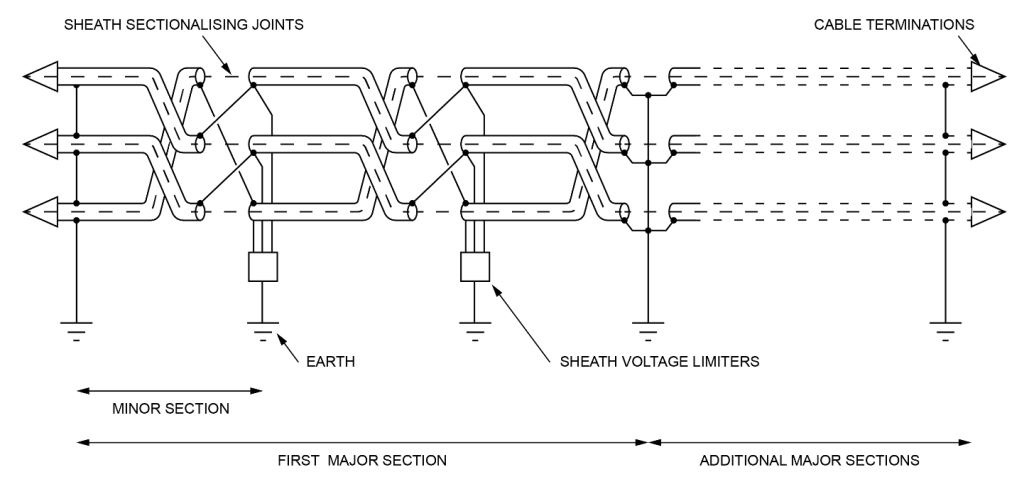
Cross bonding, on the other hand, is an innovative approach where sections of cable lengths are bonded together at alternating points, effectively balancing loads and minimizing losses. This method can be particularly effective in long-distance cable installations, where flexibility and load distribution are critical for performance.
By evaluating these bonding methods early in the design process, cable designers can identify the most effective solutions that align with customer needs. This focus not only enhances the efficiency of the cable systems but also contributes to overall cost effectiveness, ultimately leading to more sustainable solutions.
In conclusion, while conductor sizing is an integral part of economical cable design, considerations surrounding long-term sheath losses and specialized bonding methods are equally critical. By integrating these aspects into the design strategy, engineers can develop solutions that offer both durability and efficiency, ensuring that cables perform optimally throughout their lifecycle.